Cryotherapy – Skin Tag, Wart and Verruca Removal

Nurse-led care
NMC-Registered Nursing Team

75+ Years Combined Nursing Experience
Professional Skin Tag, Wart and Verruca Removal in Nottingham, Newark, Chesterfield and Derby
Although many common skin imperfections are harmless, they can affect your confidence, become irritated by clothing or jewellery, or cause discomfort during everyday activities.
What Can Cryotherapy Treat?
Skin tags
Warts
Verrucas
Milia

Age spots
Sun spots

Cherry angiomas
What’s Involved with Cryotherapy Treatment?
Cryotherapy
Professional Cryotherapy and Skin Lesion Removal in Nottingham, Newark, Chesterfield and Derby
Are you searching for professional skin tag removal, wart removal, verruca removal, milia removal or treatment for unwanted age spots and small red skin growths?
Many common skin imperfections are harmless but can become irritating, uncomfortable or affect your confidence.
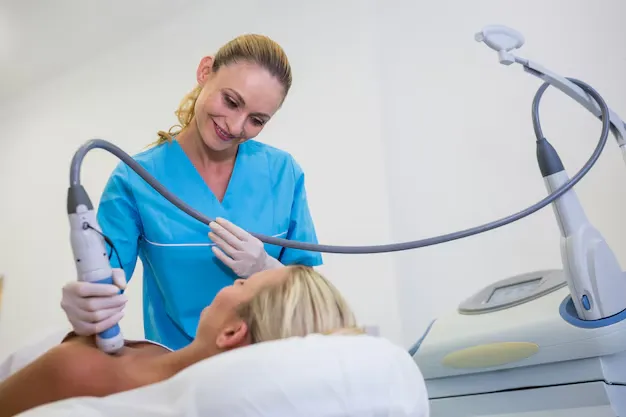
At MedSkin Clinic, our experienced NMC-registered nurses provide professional cryotherapy treatments using CryoPen™ technology to target selected benign skin lesions.
Cryotherapy is a non-surgical treatment that uses extremely cold temperatures to freeze targeted skin tissue.
Our nursing team provides individual consultations to assess your skin concerns, determine treatment suitability and explain the most appropriate treatment options.
What Is Cryotherapy?
Cryotherapy is a treatment that uses extremely cold temperatures to destroy targeted unwanted skin tissue.
At MedSkin Clinic, we use CryoPen™ technology, which delivers a controlled jet of cold nitrous oxide directly onto the selected treatment area.
The precision of the CryoPen™ allows our nursing team to target individual skin lesions while helping minimise the impact on surrounding healthy skin.
Cryotherapy may be suitable for treating:
- Skin tags
- Common warts
- Verrucas
- Milia
- Age spots
- Sun spots
- Cherry angiomas
- Selected other benign skin lesions
Not every skin lesion is suitable for cryotherapy. Appropriate assessment is essential before treatment.
What Is CryoPen™ Treatment?
CryoPen™ is a specialist cryotherapy device designed to deliver controlled freezing to selected skin lesions.
The device uses nitrous oxide to achieve extremely cold temperatures, causing targeted tissue damage that allows the treated lesion to gradually resolve as the skin heals.
CryoPen™ treatment does not normally require surgical incisions or stitches.
Treatment suitability depends on the type, size, depth and location of the skin lesion.
Some skin lesions may require more than one treatment session.
Professional Skin Tag Removal
Skin tags are small, soft skin growths that commonly develop in areas where skin rubs against clothing, jewellery or other areas of skin.
Although skin tags are generally harmless, some patients find them irritating, uncomfortable or cosmetically undesirable.
Common areas where skin tags develop include:
- Neck
- Underarms
- Chest
- Under the breasts
- Groin
- Back
- Torso
- Skin folds
Cryotherapy may be suitable for removing selected skin tags without surgical cutting.
Our nursing team will assess the size, location and appearance of your skin tag before recommending treatment.
What Causes Skin Tags?
Skin tags, medically known as acrochordons, are common benign skin growths.
They may develop for several reasons, including:
- Natural ageing
- Genetics
- Skin friction
- Hormonal changes
- Pregnancy
- Changes in body weight
- Certain metabolic factors
Skin tags can occur in both men and women.
Although they are generally harmless, new or unusual skin growths should be appropriately assessed before removal.
Skin Tag Removal on the Neck
The neck is one of the most common areas where skin tags develop.
Neck skin tags may become irritated by shirt collars, necklaces, scarves or repeated friction.
Some patients develop a single skin tag, while others notice several small growths around their neckline.
Selected neck skin tags may be suitable for CryoPen™ treatment.
Our nursing team will assess each skin tag individually and explain the expected treatment process.
Skin Tag Removal Under the Arms
Skin tags frequently develop under the arms because of repeated skin friction and movement.
Patients may experience irritation when shaving, exercising or wearing certain clothing.
Cryotherapy may provide a suitable non-surgical removal option for selected underarm skin tags.
The treatment area must be assessed carefully to determine suitability and minimise unnecessary damage to surrounding skin.
Skin Tag Removal Under the Breasts
Skin tags can develop beneath the breasts, particularly in areas where clothing and skin repeatedly rub together.
These skin tags may become uncomfortable or irritated by bras and everyday movement.
Selected skin tags in this area may be suitable for cryotherapy following an individual assessment.
Our nursing team provides professional and discreet consultations for patients concerned about unwanted skin growths.
Can Skin Tags Be Removed from the Face and Eyelids?
Skin tags can develop on the face, including around the eyes and eyelids.
However, these areas require particular care because of their delicate anatomy and proximity to the eyes.
Not all facial or eyelid skin tags are suitable for CryoPen™ treatment.
Skin lesions close to the eye may require assessment and treatment by an appropriately qualified specialist.
Our nursing team will advise whether treatment is suitable or whether an alternative referral is necessary.
Can I Remove Skin Tags at Home?
Some patients consider removing skin tags themselves using home freezing kits, creams, scissors or other methods.
Attempting to remove a skin growth without an appropriate assessment may result in:
- Bleeding
- Infection
- Scarring
- Skin burns
- Damage to surrounding tissue
- Incomplete removal
- Delayed diagnosis of an unidentified skin lesion
Not every skin growth that resembles a skin tag is necessarily a skin tag.
Professional assessment is recommended before attempting removal, particularly for lesions that are changing, bleeding or located in sensitive areas.
Professional Wart Removal
Warts are common skin growths caused by certain types of human papillomavirus, commonly known as HPV.
They can develop on different areas of the body and may vary in size, shape and appearance.
Common warts frequently develop on:
- Hands
- Fingers
- Knuckles
- Knees
- Elbows
- Feet
Although many warts eventually resolve naturally, some persist for months or longer.
Cryotherapy is an established treatment option for selected common warts.
Multiple treatment sessions may be necessary, particularly for persistent or larger warts.
What Causes Warts?
Warts develop when certain types of HPV infect the skin.
The virus may enter through small breaks or damaged areas of skin.
Warts can spread through direct skin contact, contact with contaminated surfaces or from one area of the body to another.
Not everyone exposed to the virus develops a wart.
Individual immune responses and skin condition may influence susceptibility.
Cryotherapy targets the affected tissue but cannot guarantee that warts will not return or develop elsewhere.
Wart Removal on Hands and Fingers
Warts commonly develop on the hands, fingers and around the knuckles.
They may become uncomfortable, catch on clothing or interfere with everyday activities.
Some patients also feel self-conscious about visible warts on their hands.
Cryotherapy may be suitable for treating selected hand and finger warts.
Warts close to fingernails require particular care because treatment may affect surrounding tissue or nail growth.
Our nursing team will assess the affected area before recommending treatment.
Can Persistent Warts Be Removed?
Some warts remain present despite previous treatment or the use of over-the-counter wart removal products.
Persistent warts may require repeated cryotherapy sessions or alternative treatment approaches.
Treatment effectiveness depends on several factors, including:
- Wart size
- Wart location
- Duration of the wart
- Previous treatments
- Individual immune response
- Depth of affected tissue
Cryotherapy cannot guarantee complete removal after a single appointment.
Our nursing team will discuss realistic treatment expectations before you proceed.
Professional Verruca Removal
Verrucas are viral warts that develop on the feet, particularly on the soles.
They may appear as small, rough areas of thickened skin and sometimes contain tiny dark dots.
Because verrucas frequently develop on weight-bearing areas, they may become uncomfortable when standing, walking or exercising.
Cryotherapy may be suitable for treating selected verrucas.
Some verrucas require multiple treatment sessions, while others may benefit from alternative treatments or podiatry assessment.
What Is the Difference Between a Wart and a Verruca?
Warts and verrucas are both caused by certain types of human papillomavirus.
The main difference is their location and appearance.
Warts commonly develop on the hands, fingers and other areas of the body.
Verrucas develop on the soles of the feet and may grow inwards because of pressure from standing and walking.
Both may be suitable for cryotherapy following an appropriate assessment.
Can Cryotherapy Remove Painful Verrucas?
Verrucas located on weight-bearing areas of the feet can sometimes cause discomfort when walking, running or standing.
Cryotherapy may help treat selected verrucas, although temporary discomfort and blistering may occur following treatment.
Patients with diabetes, poor circulation, reduced sensation in their feet or certain medical conditions may require specialist assessment before undergoing verruca treatment.
Our nursing team will determine whether cryotherapy is appropriate for your individual circumstances.
Professional Milia Removal
Milia are small, white or creamy-coloured bumps that develop when keratin becomes trapped beneath the surface of the skin.
They are particularly common around the face and may develop on:
- Cheeks
- Forehead
- Nose
- Around the eyes
- Chin
Milia are generally harmless but can become a cosmetic concern.
Selected milia may be suitable for cryotherapy, although other professional removal techniques may be more appropriate depending on their location and appearance.
Our nursing team will assess your skin before recommending treatment.
What Are the Small White Spots Under My Eyes?
Small white bumps around the eyes may be milia, although other skin conditions can have a similar appearance.
Milia are small keratin-filled cysts that can develop beneath the skin’s surface.
Unlike ordinary spots, they do not necessarily contain pus and cannot always be removed by squeezing.
Attempting to remove them at home may damage the delicate skin around the eyes.
Milia close to the eyes require careful assessment, and cryotherapy may not be appropriate in every case.
What Causes Milia?
Milia develop when keratin, a naturally occurring protein found in the skin, becomes trapped beneath its surface.
They may occur naturally or develop following certain types of skin damage.
Possible contributing factors include:
- Natural skin processes
- Sun-related skin damage
- Previous skin injuries
- Certain skin conditions
- Changes following skin treatments
Milia can develop in people of different ages and skin types.
Professional assessment can help establish whether the bumps are milia and which removal method may be suitable.
Professional Age Spot Removal
Age spots are flat areas of pigmentation that commonly develop on skin exposed to sunlight over many years.
They are sometimes referred to as liver spots, although they are not caused by liver disease.
Common areas where age spots develop include:
- Face
- Hands
- Forearms
- Shoulders
- Upper chest
- Neck
Selected, confirmed benign age spots may be suitable for cryotherapy.
Pigmented skin lesions must be appropriately assessed before treatment because some potentially serious skin conditions can resemble ordinary age spots.
Sun Spot Removal and Treatment for Brown Spots on the Skin
Sun spots are areas of pigmentation associated with cumulative exposure to ultraviolet radiation.
They may become increasingly noticeable with age and commonly develop on exposed areas of the body.
Patients may describe these as:
- Brown spots
- Dark spots
- Liver spots
- Age spots
- Sun damage spots
- Brown marks on the hands or face
Cryotherapy may be suitable for treating selected benign sun spots.
However, not all pigmentation is appropriate for freezing treatment.
Our nursing team will advise whether treatment is suitable or whether further medical assessment is necessary.
Age Spot Removal on the Hands
The hands are frequently exposed to sunlight and may gradually develop brown spots and uneven pigmentation.
Some patients become concerned about age spots that make their hands appear older.
Selected benign age spots may be suitable for cryotherapy following appropriate assessment.
Treatment can result in temporary or longer-lasting changes in skin pigmentation.
Regular sun protection may help reduce the development of further sun-related pigmentation.
Can Cryotherapy Remove Age Spots on the Face?
Selected benign age spots on the face may be suitable for cryotherapy.
However, facial pigmentation can have several different causes, and some conditions may require alternative treatment.
Cryotherapy is not appropriate for every type of facial pigmentation, including conditions such as melasma.
The risk of lighter or darker skin pigmentation following treatment must also be considered.
Appropriate assessment is essential before treating any pigmented facial lesion.
Professional Cherry Angioma Removal
Cherry angiomas are common benign skin growths made up of small blood vessels.
They typically appear as small red, purple or blood-coloured spots on the skin.
They may develop on different areas of the body, including:
- Chest
- Back
- Shoulders
- Arms
- Abdomen
- Torso
Although cherry angiomas are generally harmless, some patients choose to have them removed for cosmetic reasons or because they become irritated.
Selected cherry angiomas may be suitable for cryotherapy following an individual assessment.
What Are the Small Red Blood Spots on My Skin?
Small red or blood-coloured spots on the skin may be cherry angiomas.
These are sometimes informally referred to as blood spots, red moles or blood moles.
However, not all red skin spots are cherry angiomas.
New, unusual, rapidly changing or unexplained red skin lesions should receive appropriate medical assessment.
Our nursing team will assess whether your skin concern may be suitable for cryotherapy or whether further investigation is required.
Can Cherry Angiomas Be Removed Without Surgery?
Selected cherry angiomas may be treated using non-surgical methods such as cryotherapy.
Treatment suitability depends on the size, depth, appearance and location of the lesion.
Some cherry angiomas may be more appropriately treated using alternative techniques.
Our nursing team will explain the available treatment options and potential risks before you proceed.
Can Cryotherapy Remove Seborrhoeic Keratoses?
Seborrhoeic keratoses are common benign skin growths that may appear raised, rough, waxy or wart-like.
They can vary in colour from light brown to darker shades and frequently develop during adulthood.
They are sometimes informally described as age-related warts or senile warts, although they are different from viral warts.
Cryotherapy may be an appropriate treatment option for certain confirmed seborrhoeic keratoses.
However, because some skin cancers can resemble these growths, appropriate diagnosis is essential before removal.
Contact MedSkin Clinic to discuss assessment and confirm whether treatment is available and appropriate.
Can Cryotherapy Remove Moles?
Cryotherapy should not be used to remove unidentified moles or suspicious pigmented skin lesions.
Moles require appropriate assessment, particularly if they have changed in size, shape, colour or appearance.
Freezing a suspicious lesion may destroy tissue that could otherwise be examined to establish a diagnosis.
Patients concerned about a new or changing mole should seek assessment from their GP or an appropriately qualified dermatology professional.
MedSkin Clinic does not recommend cosmetic freezing of unidentified or suspicious moles.
What Skin Lesions Should Not Be Treated with Cryotherapy?
Not all skin growths are suitable for cosmetic cryotherapy.
Further medical assessment may be required for skin lesions that:
- Have recently changed in size, shape or colour
- Have irregular borders
- Bleed without an obvious cause
- Become persistently painful
- Develop unusual pigmentation
- Fail to heal
- Repeatedly crust or ulcerate
- Have an uncertain diagnosis
- Are suspected of being cancerous or precancerous
Patients experiencing these changes should seek appropriate medical assessment before considering cosmetic removal.
Patient safety and appropriate identification of skin lesions are essential considerations.
Cryotherapy for Men and Women
Cryotherapy may be suitable for adults concerned about unwanted benign skin growths.
Both men and women commonly develop skin tags, warts, verrucas, age spots, milia and cherry angiomas.
Patients may seek treatment because a skin growth:
- Affects their confidence
- Becomes irritated by clothing
- Interferes with shaving
- Catches on jewellery
- Causes discomfort during exercise
- Becomes inconvenient during everyday activities
Our nursing team provides personalised consultations in a professional and discreet clinical environment.
Cryotherapy for Different Skin Types and Skin Tones
Cryotherapy can affect the pigment-producing cells within the skin.
Following treatment, some patients may experience temporary or permanent lightening or darkening of the treated area.
Pigmentation changes may be particularly noticeable in patients with darker skin tones.
Our nursing team will consider your skin type, treatment area and individual risk factors when assessing treatment suitability.
Alternative removal methods may be recommended where appropriate.
Who May Be Suitable for Cryotherapy Treatment?
Cryotherapy may be suitable for selected adults with appropriately identified benign skin lesions.
Patients may wish to consider treatment for:
- Unwanted skin tags
- Common warts
- Persistent verrucas
- Selected milia
- Confirmed benign age spots
- Confirmed benign sun spots
- Cherry angiomas
Treatment suitability depends on the type of lesion, its location, individual medical history and the condition of the surrounding skin.
An individual assessment is necessary before treatment can be recommended.
Who May Not Be Suitable for Cryotherapy?
Cryotherapy may be inappropriate or require additional precautions for patients with certain medical conditions.
These may include:
- Poor circulation
- Reduced skin sensation
- Certain cold-related medical conditions
- Raynaud’s phenomenon
- Cryoglobulinaemia
- Active skin infections
- Impaired wound healing
- Certain immune system conditions
- Diabetes affecting circulation or sensation
- Previous adverse reactions to freezing treatments
- Unidentified or suspicious skin lesions
Patients who are pregnant or breastfeeding should discuss treatment suitability with their healthcare professional.
Our nursing team will review your medical history and determine whether treatment is appropriate.
What Happens During a Cryotherapy Consultation?
Your initial consultation provides an opportunity to discuss your skin concerns, understand treatment options and ask questions.
Assessment of Your Skin Lesion
Your nurse will assess the appearance, size and location of the skin lesion.
Where the diagnosis is uncertain or the lesion appears suspicious, further medical assessment may be recommended before treatment.
Medical History and Treatment Suitability
Your medical history, medication, allergies, previous treatments and relevant skin conditions will be reviewed.
This helps determine whether cryotherapy is appropriate and whether any additional precautions are necessary.
Personalised Cryotherapy Treatment Plan
Your nurse will explain the proposed treatment, potential risks, expected healing process, likely number of appointments and associated costs.
You will have the opportunity to ask questions before deciding whether to proceed.
There is no obligation to undergo treatment following your consultation.
What Happens During CryoPen™ Treatment?
During treatment, the CryoPen™ device delivers a controlled jet of cold nitrous oxide onto the targeted skin lesion.
The freezing process damages the selected tissue, allowing the body to gradually remove the affected tissue during healing.
The duration and number of freezing applications depend on the type, size and location of the lesion.
Some patients experience a temporary stinging or burning sensation during treatment.
Following the procedure, your nurse will explain what to expect and provide appropriate aftercare instructions.
How Long Does Cryotherapy Treatment Take?
Individual CryoPen™ applications may take only a few seconds.
However, overall appointment duration depends on several factors, including:
- Number of skin lesions
- Size of each lesion
- Treatment location
- Type of skin growth
- Required assessment
- Individual treatment requirements
Your nurse will confirm the expected appointment duration during your consultation.
Does Cryotherapy Hurt?
Individual experiences of cryotherapy vary.
Some patients experience temporary stinging, burning, cold sensations or discomfort during the freezing process.
The treated area may remain tender for a short period afterwards.
Discomfort may vary depending on the location and size of the lesion.
Cryotherapy does not usually require surgical incisions or stitches, but it should not be described as completely painless.
Our nursing team will explain what to expect before treatment.
How Many Cryotherapy Treatments Will I Need?
The number of treatments required depends on the type, size, depth and location of the skin lesion.
Some small skin tags may respond to a single treatment, while larger or more persistent lesions may require further appointments.
Warts and verrucas frequently require repeated treatments.
Your nurse will assess the lesion and explain the anticipated treatment plan.
Complete removal following one appointment cannot be guaranteed.
Can Multiple Skin Tags Be Removed in One Appointment?
Depending on the size, number and location of the skin tags, it may be possible to treat several during one appointment.
Each skin growth must be individually assessed before treatment.
Our nursing team will consider the overall treatment area, potential risks and expected healing process when planning your appointment.
Patients with numerous skin tags can discuss their requirements during a free initial consultation.
Cryotherapy Before and After Treatment
Patients considering cryotherapy often want to understand how their skin may look before and after treatment.
Following freezing, the treated lesion may gradually change in appearance as the affected tissue heals.
Depending on the lesion, patients may experience:
- Temporary redness
- Localised swelling
- Blistering
- Darkening of the treated tissue
- Scab formation
- Gradual separation of treated tissue
- Changes in skin pigmentation
Healing times and final results vary between individuals.
Before-and-after photographs of other patients cannot guarantee the same treatment outcome.
What Happens to a Skin Tag After Cryotherapy?
Following cryotherapy, a treated skin tag may gradually darken, dry out or form a small scab.
The treated tissue may eventually separate from the surrounding skin as healing progresses.
The time required varies depending on the size of the skin tag and individual healing response.
Patients should avoid pulling, picking or attempting to remove the treated skin tag prematurely.
Further treatment may be required if the lesion does not fully resolve.
How Long Does Cryotherapy Take to Heal?
Healing times vary depending on the treatment area, type of lesion and individual healing response.
Some small treatment areas may heal within one to three weeks, while larger lesions or areas such as the lower legs may take longer.
Temporary redness, blistering, scabbing and changes in pigmentation can occur during healing.
Your nurse will provide guidance regarding the expected recovery process and when further assessment may be necessary.
Is It Normal to Get a Blister After Cryotherapy?
Blistering can occur following cryotherapy and may form part of the normal healing response.
A blister may contain clear fluid or appear darker if it contains blood.
Patients should generally avoid deliberately bursting or picking the blister.
If the blister becomes particularly painful, develops signs of infection or causes concern, contact your treating healthcare professional for advice.
Cryotherapy Recovery and Aftercare
Appropriate aftercare is important following cryotherapy.
Your nurse will provide individual instructions depending on the type and location of the treated lesion.
General aftercare advice may include:
- Keeping the treated area clean
- Avoiding unnecessary rubbing or friction
- Avoiding picking or scratching scabs
- Avoiding deliberately bursting blisters
- Protecting healing skin from excessive sunlight
- Following advice regarding dressings and skincare
- Monitoring the area for signs of infection
- Attending follow-up appointments where recommended
Patients should avoid attempting further home freezing treatments while the area is healing unless advised by an appropriate healthcare professional.
What Are the Risks and Side Effects of Cryotherapy?
Although cryotherapy is an established treatment for selected skin lesions, it carries potential risks and side effects.
These may include:
- Temporary discomfort
- Redness
- Swelling
- Blistering
- Scab formation
- Bleeding
- Infection
- Scarring
- Temporary or permanent pigmentation changes
- Damage to surrounding healthy tissue
- Nerve injury or altered sensation
- Incomplete removal
- Recurrence of the treated lesion
The likelihood of complications depends on several factors, including the treatment area, freezing duration, skin type and individual medical history.
Our nursing team will explain the potential risks before treatment.
When Should I Seek Medical Advice After Cryotherapy?
Patients should seek appropriate medical advice if they experience:
- Increasing or severe pain
- Spreading redness
- Increasing swelling
- Pus or unusual discharge
- Persistent bleeding
- Fever or feeling generally unwell
- Unexpected changes in skin sensation
- Delayed healing
- Other concerning symptoms
Contact your treating healthcare professional promptly if you are concerned about your recovery.
If symptoms are severe or you become seriously unwell, seek urgent medical assistance.
Can Skin Tags, Warts and Verrucas Return After Cryotherapy?
Cryotherapy targets individual skin lesions, but it cannot prevent every future skin growth.
A successfully removed skin tag may not return in the same location, although new skin tags can develop elsewhere.
Warts and verrucas may recur because they are associated with a viral infection.
New age spots and cherry angiomas may also develop over time.
Further treatment may be appropriate following an individual assessment.
Permanent removal and prevention of future skin lesions cannot be guaranteed.
Cryotherapy Compared with Other Skin Lesion Removal Treatments
Different skin lesions may require different removal techniques.
Depending on the diagnosis and individual circumstances, alternative treatment options may include:
- Surgical removal
- Electrosurgery
- Laser treatment
- Professional milia extraction
- Topical wart and verruca treatments
- Specialist dermatology treatment
- Podiatry treatment for certain foot conditions
Cryotherapy is not necessarily the most appropriate option for every skin lesion.
Our nursing team will discuss treatment suitability and recommend further assessment or alternative approaches where necessary.
Private Skin Tag, Wart and Verruca Removal
Some patients choose private skin lesion removal because their skin growth is causing irritation, discomfort or cosmetic concerns.
MedSkin Clinic provides private nurse-led consultations for selected benign skin lesions.
Patients can discuss their concerns, treatment suitability, expected recovery and associated costs before deciding whether to proceed.
Suspicious or potentially serious skin lesions require appropriate medical assessment rather than cosmetic removal.
Cryotherapy, Skin Tag, Wart and Verruca Removal Nottingham
If you are searching for professional cryotherapy in Nottingham, MedSkin Clinic provides nurse-led skin lesion removal consultations within Nottingham’s historic Lace Market district.
Located within a historic Grade II listed building, our Nottingham clinic provides a professional and discreet environment for patients considering private skin lesion removal using CryoPen™ technology.
Patients may wish to have unwanted skin growths removed because they become irritated by clothing, interfere with shaving, catch on jewellery or affect their confidence.
Our Nottingham clinic welcomes patients concerned about:
- Skin tag removal Nottingham
- Wart removal Nottingham
- Verruca removal Nottingham
- Milia removal Nottingham
- Age spot removal Nottingham
- Sun spot removal Nottingham
- Cherry angioma removal Nottingham
- CryoPen™ treatment Nottingham
- Skin tags around the neck
- Skin tags under the arms and breasts
- Persistent warts on the hands and fingers
- Verrucas on the soles of the feet
- Small white spots around the face
- Brown age spots on the hands and face
- Small red blood spots on the skin
- Selected benign skin growths
Our experienced NMC-registered nurses will assess your individual skin concerns and determine whether cryotherapy is an appropriate treatment option.
Private Skin Tag and Wart Removal in Nottingham
Patients with multiple skin tags or persistent warts can discuss whether several lesions may be treated during one appointment and whether further treatment sessions are likely to be necessary.
Patients considering age spot or milia removal can also discuss alternative treatment options where cryotherapy may not be appropriate.
Our nursing team will explain the anticipated healing process, potential pigmentation changes, treatment costs and aftercare requirements before you decide whether to proceed.
We welcome patients from:
- Nottingham city centre
- West Bridgford
- Beeston
- Arnold
- Mapperley
- Wollaton
- Carlton
- Ruddington
- Clifton
- Gedling
- Radcliffe-on-Trent
- Surrounding Nottinghamshire communities
Whether you are searching for skin tag removal in Nottingham, private wart removal, verruca freezing treatment, milia removal or professional CryoPen™ treatment, our experienced nursing team can discuss your individual requirements.
Visit our Nottingham clinic page for further information and appointment availability.
Contact MedSkin Clinic Nottingham to arrange your free, no-obligation initial cryotherapy consultation.
Cryotherapy, Skin Tag, Wart and Verruca Removal Newark-on-Trent
MedSkin Clinic provides professional cryotherapy consultations at our Newark-on-Trent clinic.
Patients searching for skin tag removal, wart removal, verruca removal, milia removal or treatment for unwanted age spots can discuss their concerns with our experienced nursing team.
Our Newark clinic provides individual assessments to determine whether CryoPen™ treatment may be suitable for selected benign skin lesions.
Some patients seek treatment for skin tags that have developed around their neck, under their arms or beneath their breasts, while others are concerned about persistent warts, verrucas or unwanted facial skin imperfections.
Our Newark-on-Trent clinic welcomes enquiries concerning:
- Professional skin tag removal
- Multiple skin tag removal
- Neck and underarm skin tags
- Common wart removal
- Persistent wart removal
- Verruca freezing treatments
- Milia and small white facial bumps
- Age spot and liver spot removal
- Sun spots and brown skin marks
- Cherry angiomas and red blood spots
- Selected benign skin lesions
- Non-surgical CryoPen™ treatment
CryoPen™ Skin Lesion Removal in Newark-on-Trent
Patients considering private skin lesion removal in Newark can arrange an individual consultation to discuss the appearance, size and location of their unwanted skin growths.
Our NMC-registered nurses will review your medical history and determine whether professional freezing treatment may be suitable.
Patients with persistent verrucas or warts that have not responded to previous treatments can discuss realistic treatment expectations and whether repeated appointments may be necessary.
Where a skin lesion has an uncertain diagnosis or appears suspicious, further medical assessment will be recommended before cosmetic removal is considered.
Our Newark-on-Trent clinic welcomes patients from:
- Newark-on-Trent
- Balderton
- Southwell
- Fernwood
- Collingham
- Farndon
- Bingham
- Lincoln
- Long Bennington
- Grantham
- Surrounding Nottinghamshire and Lincolnshire communities
Whether you are searching for skin tag removal in Newark, wart freezing, verruca removal, age spot removal or professional cryotherapy near Southwell or Lincoln, MedSkin Clinic provides personalised nurse-led consultations.
Visit our Newark clinic page for further information and appointment availability.
Contact MedSkin Clinic Newark to arrange your free, no-obligation initial consultation.
Cryotherapy, Skin Tag, Wart and Verruca Removal Chesterfield
Patients searching for professional cryotherapy and skin lesion removal in Chesterfield can arrange a consultation with MedSkin Clinic.
Our Chesterfield clinic welcomes patients who are concerned about unwanted skin growths that cause irritation, discomfort or cosmetic concerns.
Some patients have experienced persistent warts or verrucas for several months, while others wish to explore professional removal of skin tags, milia or age-related skin imperfections.
Our Chesterfield clinic welcomes patients concerned about:
- Unwanted skin tags
- Common warts
- Persistent verrucas
- Milia
- Age spots
- Sun spots
- Cherry angiomas
- Multiple skin tags around the neck
- Skin tags under the arms
- Warts on the hands and fingers
- Verrucas on weight-bearing areas of the feet
- Brown spots on the hands and face
- Small red blood spots on the body
- Selected benign raised skin growths
Our experienced nursing team will assess your individual skin concerns and explain appropriate treatment options.
Professional Wart, Verruca and Skin Tag Removal in Chesterfield
Patients who have previously attempted home freezing treatments or over-the-counter wart and verruca removal products may wish to discuss whether professional cryotherapy is appropriate.
The number of appointments required will depend on the type, size, depth and location of the skin lesion.
Patients considering the removal of several skin tags can discuss whether treatment may be possible during one appointment.
Our nursing team will also explain the expected healing process, potential risks and appropriate aftercare, including any precautions relevant to your skin type or medical history.
Not every skin growth is suitable for freezing, and patients with unidentified or suspicious lesions will be advised to seek appropriate medical assessment.
Our Chesterfield clinic welcomes patients from:
- Chesterfield town centre
- Dronfield
- Staveley
- Brimington
- Wingerworth
- Bolsover
- Clay Cross
- Matlock
- Hasland
- Newbold
- Surrounding North Derbyshire communities
Whether you are searching for private skin tag removal in Chesterfield, wart removal, verruca freezing, milia removal or CryoPen™ treatment for selected benign skin lesions, our experienced nursing team can assess your individual concerns.
Visit our Chesterfield clinic page for further information and appointment availability.
Contact MedSkin Clinic Chesterfield to arrange your free, no-obligation initial cryotherapy consultation.
Cryotherapy, Skin Tag, Wart and Verruca Removal Near Derby
If you live in Derby or the surrounding Derbyshire area and are searching for professional skin tag removal, wart removal, verruca removal or CryoPen™ treatment, MedSkin Clinic welcomes your enquiry.
Our NMC-registered nurses provide personalised consultations for selected benign skin lesions, including milia, age spots, sun spots and cherry angiomas.
Patients from Derby may be considering professional skin lesion removal because unwanted growths have become uncomfortable, interfere with everyday activities or affect their confidence.
Others may have tried home treatments without achieving the results they were hoping for.
Patients considering private cryotherapy treatment can discuss their individual concerns, treatment suitability and expected results with our nursing team.
We welcome enquiries concerning:
- Skin tag removal near Derby
- Private wart removal
- Persistent verruca treatment
- CryoPen™ freezing treatment
- Multiple skin tag removal
- Skin tags on the neck and underarms
- Warts on the hands and fingers
- Verrucas on the feet
- Milia and small white facial spots
- Age spots and liver spots
- Sun spots and brown skin marks
- Cherry angiomas and red blood spots
- Selected benign skin growths
- Professional non-surgical skin lesion removal
Private Cryotherapy and Skin Lesion Removal for Derby Patients
Patients searching for professional cryotherapy near Derby can arrange a consultation at one of our established MedSkin Clinic locations.
Our nursing team will assess your skin concerns and discuss whether CryoPen™ treatment or an alternative removal technique may be appropriate.
Patients with persistent warts or verrucas can discuss the likely number of appointments required, while those considering skin tag removal can explore whether multiple lesions may be treated during the same appointment.
The risks of scarring, pigmentation changes, incomplete removal and recurrence will be explained before treatment is undertaken.
Patients with unidentified, changing or suspicious skin lesions should seek appropriate medical assessment before considering cosmetic removal.
We welcome patients from:
- Derby city centre
- Allestree
- Mickleover
- Littleover
- Chellaston
- Spondon
- Oakwood
- Borrowash
- Duffield
- Belper
- Ripley
- Melbourne
- Surrounding Derbyshire communities
Whether you are searching for skin tag removal near Derby, professional wart freezing, verruca removal, age spot removal or CryoPen™ skin lesion treatment, MedSkin Clinic can help you explore appropriate treatment options.
Free, no-obligation initial consultations are available at our established clinics in Nottingham, Newark-on-Trent and Chesterfield.
Contact MedSkin Clinic to confirm your nearest available clinic location and appointment arrangements.
How Much Does Cryotherapy Cost?
The cost of cryotherapy depends on the type, size, location and number of skin lesions requiring treatment.
Factors influencing treatment prices may include:
- Number of skin tags
- Size and location of warts
- Number of verrucas
- Type of skin lesion
- Number of treatment applications
- Additional treatment appointments
- Individual treatment requirements
Patients comparing skin tag removal prices, wart removal costs or verruca treatment prices should also consider practitioner qualifications, clinical assessment, treatment suitability and aftercare.
MedSkin Clinic offers free initial consultations, allowing our nursing team to assess your concerns and explain the associated treatment costs.
Visit our treatment pricing page for further information.
Why Choose MedSkin Clinic for Cryotherapy and Skin Lesion Removal?
MedSkin Clinic provides professional nurse-led aesthetic care with an emphasis on individual assessment, patient wellbeing and appropriate treatment selection.
Patients considering cryotherapy can benefit from:
- Experienced NMC-registered nurses
- Professional CryoPen™ technology
- Individual skin lesion assessments
- Personalised treatment planning
- Consideration of alternative treatment options
- Clear information about potential risks
- Realistic treatment expectations
- Professional and discreet clinical environments
- Appropriate aftercare advice
- Continuity of nursing care
- Free, no-obligation initial consultations
All our nurses are registered with the Nursing and Midwifery Council (NMC).
Patients can independently verify their nurse’s registration through the official Nursing and Midwifery Council register.
Our approach focuses on helping patients make informed decisions about their skin concerns without feeling pressured to undergo treatment.
Book Your Free Cryotherapy and Skin Lesion Removal Consultation
Whether you are concerned about unwanted skin tags, warts, verrucas, milia, age spots, sun spots or cherry angiomas, our experienced nursing team is available to discuss your individual requirements.
At MedSkin Clinic, we provide professional, nurse-led cryotherapy consultations using CryoPen™ technology for selected benign skin lesions.
We welcome patients from Nottingham, Newark, Chesterfield, Derby and surrounding areas.
Contact MedSkin Clinic to arrange your free, no-obligation initial consultation and discuss appropriate treatment options.
Telephone: 0330 113 2640
SMS only: 07427 800640
Email: hello@medskinclinic.co.uk
MedSkin Clinic – Friendly, Professional, Nurse-Led Aesthetics.
Frequently Asked Questions About Cryotherapy and Skin Lesion Removal
What is cryotherapy?
+Cryotherapy is a non-surgical treatment that uses extremely cold temperatures to freeze targeted unwanted skin tissue.
At MedSkin Clinic, our experienced NMC-registered nurses use CryoPen™ technology to treat selected benign skin lesions, including skin tags, warts, verrucas, milia, age spots and cherry angiomas.
What is CryoPen™ treatment and how does it work?
+CryoPen™ is a specialist cryotherapy device that delivers a controlled jet of extremely cold nitrous oxide directly onto a targeted skin lesion.
The freezing process damages the selected tissue, allowing it to gradually resolve as the skin heals.
The precision of the device helps minimise the impact on surrounding healthy skin, although some damage to surrounding tissue remains possible.
What skin conditions can cryotherapy treat?
+Cryotherapy may be suitable for treating selected benign skin lesions, including:
- Skin tags
- Common warts
- Verrucas
- Milia
- Age spots
- Sun spots
- Cherry angiomas
- Selected other benign skin growths
All skin lesions must be appropriately assessed before treatment.
How can I get rid of unwanted skin tags?
+Professional cryotherapy may provide a suitable non-surgical treatment option for removing selected skin tags.
The CryoPen™ device freezes the targeted skin tag, which may gradually darken, dry out and separate from the surrounding skin during healing.
Some skin tags may require additional treatment depending on their size and location.
What causes skin tags?
+Skin tags are common benign skin growths that may develop due to several factors, including:
- Natural ageing
- Genetics
- Skin friction
- Hormonal changes
- Pregnancy
- Changes in body weight
- Certain metabolic factors
They commonly develop around the neck, underarms, beneath the breasts and within other skin folds.
Can you remove skin tags from my neck?
+Selected skin tags around the neck may be suitable for CryoPen™ treatment.
Neck skin tags can become irritated by necklaces, shirt collars, scarves and repeated friction.
Our nursing team will assess the size, location and appearance of each skin tag before recommending treatment.
Can skin tags under the arms or breasts be removed?
+Cryotherapy may be suitable for removing selected skin tags under the arms and beneath the breasts.
These areas are particularly susceptible to skin friction, which can cause irritation and discomfort.
Our nursing team provides professional and discreet consultations to assess treatment suitability.
Can skin tags be removed from the face and eyelids?
+Some facial skin tags may be suitable for cryotherapy following an appropriate assessment.
However, skin lesions on or near the eyelids require particular care because of their proximity to the eyes.
Not all facial or eyelid skin tags are suitable for freezing treatment, and specialist assessment may be recommended.
Can I remove several skin tags during one appointment?
+Depending on the number, size and location of the skin tags, it may be possible to treat several during one appointment.
Each skin growth must be individually assessed before treatment.
Our nursing team will explain the proposed treatment plan, expected healing process and associated costs during your consultation.
Is professional skin tag removal better than removing skin tags at home?
+Professional assessment helps establish whether a skin growth is suitable for removal and which treatment method may be appropriate.
Attempting to cut, freeze or remove skin tags at home can result in bleeding, infection, scarring, skin damage or incomplete removal.
Not every skin growth that resembles a skin tag is necessarily a skin tag.
Unidentified or changing skin lesions should receive appropriate medical assessment before removal.
Can cryotherapy remove warts on my hands and fingers?
+Cryotherapy is an established treatment option for selected common warts on the hands and fingers.
The freezing process targets the affected skin tissue.
Some warts may require several treatment sessions, particularly if they are larger, persistent or have previously been treated unsuccessfully.
Warts close to fingernails require particular care.
What causes warts, and are they contagious?
+Warts are caused by certain types of human papillomavirus, commonly known as HPV.
They can spread through direct skin contact, contact with contaminated surfaces or from one area of the body to another.
Cryotherapy targets affected tissue but cannot guarantee that warts will not return or develop elsewhere.
Can cryotherapy remove stubborn or persistent warts?
+Selected persistent warts may respond to cryotherapy, although repeated treatment sessions may be necessary.
Treatment effectiveness depends on the size, location and duration of the wart, previous treatments and individual immune response.
Complete removal cannot be guaranteed following a single appointment.
Can cryotherapy remove verrucas on my feet?
+Cryotherapy may be suitable for treating selected verrucas on the feet.
Verrucas are viral warts that commonly develop on the soles of the feet and can become uncomfortable when walking, running or standing.
Some verrucas require multiple treatment sessions or alternative treatment approaches.
Patients with diabetes, poor circulation or reduced sensation in their feet may require specialist assessment.
What is the difference between a wart and a verruca?
+Warts and verrucas are both caused by certain types of HPV.
Common warts frequently develop on the hands, fingers and other areas of the body.
Verrucas are warts that develop on the soles of the feet and may grow inwards because of pressure from standing and walking.
Both may be suitable for cryotherapy following an appropriate assessment.
Can cryotherapy remove milia and small white spots under the eyes?
+Milia are small, white or creamy-coloured bumps that develop when keratin becomes trapped beneath the surface of the skin.
Selected milia may be suitable for cryotherapy, although professional extraction or alternative treatment may be more appropriate in some cases.
Milia close to the eyes require careful assessment because of the delicate surrounding anatomy.
Not all white spots around the eyes are milia.
Can cryotherapy remove age spots, liver spots and sun spots?
+Selected, confirmed benign age spots and sun spots may be suitable for cryotherapy.
These areas of pigmentation commonly develop following prolonged sun exposure and may appear on the face, hands, arms, shoulders and chest.
Pigmented skin lesions must be appropriately assessed before treatment because potentially serious skin conditions can sometimes resemble ordinary age spots.
Can you remove brown age spots from my hands and face?
+Selected benign age spots on the hands and face may be suitable for CryoPen™ treatment.
However, not every type of skin pigmentation is appropriate for cryotherapy.
Treatment may also result in temporary or permanent changes in skin colour.
Our nursing team will assess the affected areas and advise whether cryotherapy or an alternative treatment may be appropriate.
Can cryotherapy remove cherry angiomas and small red blood spots?
+Cherry angiomas are common benign skin growths made up of small blood vessels.
They may appear as small red, purple or blood-coloured spots on the chest, back, arms, shoulders and other areas of the body.
Selected cherry angiomas may be suitable for cryotherapy.
However, not all red skin spots are cherry angiomas, and appropriate assessment is essential before removal.
Can cryotherapy remove moles or raised brown skin growths?
+Cryotherapy should not be used to remove unidentified moles or suspicious pigmented skin lesions.
Certain confirmed benign growths, such as seborrhoeic keratoses, may be suitable for cryotherapy following appropriate diagnosis and confirmation that treatment is available.
New or changing moles, irregular pigmentation, unexplained bleeding and unusual skin growths should receive assessment from a GP or appropriately qualified dermatology professional before cosmetic removal is considered.
Does cryotherapy hurt, and how long does treatment take?
+Individual CryoPen™ applications may take only a few seconds, although overall appointment duration depends on the type, size and number of skin lesions being treated.
Some patients experience temporary stinging, burning, cold sensations or discomfort during treatment.
The treated area may also remain tender for a short period afterwards.
Our nursing team will explain what to expect before treatment.
How long does cryotherapy take to heal, and is blistering normal?
+Healing times vary depending on the type, size and location of the treated skin lesion.
Some small treatment areas may heal within one to three weeks, although larger lesions or certain areas of the body may take longer.
Temporary redness, swelling, blistering, darkening of the treated tissue and scab formation may occur.
Patients should avoid picking scabs, deliberately bursting blisters or pulling treated skin tags away prematurely.
Your nurse will provide individual aftercare instructions following treatment.
Is cryotherapy safe, and what are the possible side effects?
+Cryotherapy is an established treatment for selected skin lesions, but it carries potential risks and side effects.
These may include:
- Temporary discomfort
- Redness and swelling
- Blistering
- Bleeding
- Infection
- Scarring
- Temporary or permanent pigmentation changes
- Damage to surrounding healthy skin
- Nerve injury or altered sensation
- Incomplete removal
- Recurrence of the treated lesion
Patients with certain medical conditions, poor circulation, reduced skin sensation or impaired wound healing may not be suitable for treatment.
Increasing pain, spreading redness, unusual discharge, fever or delayed healing should receive appropriate medical assessment.
Our NMC-registered nurses will explain treatment suitability, potential risks and aftercare before you proceed.
How much does cryotherapy, skin tag removal and wart removal cost?
+The cost of cryotherapy depends on several factors, including:
- Type of skin lesion
- Size of the lesion
- Number of skin lesions
- Treatment location
- Number of freezing applications required
- Additional treatment appointments
MedSkin Clinic offers free initial consultations, allowing our nursing team to assess your individual requirements and explain the associated treatment costs.
Visit our treatment pricing page for further information.
Where can I get cryotherapy, skin tag removal and wart removal in Nottingham?
+MedSkin Clinic provides professional nurse-led cryotherapy consultations at our Nottingham clinic, located within Nottingham’s historic Lace Market district.
Our experienced nursing team provides assessments for:
- Skin tag removal
- Wart removal
- Verruca removal
- Milia removal
- Age spot removal
- Sun spot removal
- Cherry angioma removal
- CryoPen™ treatment
We welcome patients from Nottingham city centre, West Bridgford, Beeston and surrounding Nottinghamshire communities.
Contact our Nottingham clinic to arrange a free initial consultation.
Where can I get cryotherapy and skin tag removal in Newark?
+MedSkin Clinic provides professional cryotherapy and skin lesion removal consultations at our Newark-on-Trent clinic.
Our NMC-registered nurses can assess unwanted skin tags, common warts, verrucas, milia, age spots, sun spots and cherry angiomas.
We welcome patients from Newark, Balderton, Southwell, Collingham and surrounding areas.
Contact our Newark clinic to discuss treatment suitability and arrange a free initial consultation.
Where can I get skin tag, wart and verruca removal in Chesterfield?
+MedSkin Clinic provides professional nurse-led cryotherapy consultations at our Chesterfield clinic.
Patients can discuss treatment options for unwanted skin tags, persistent warts, verrucas, milia, age spots, sun spots and small red skin growths.
Our experienced nursing team will assess your skin concerns and explain whether CryoPen™ treatment may be appropriate.
We welcome patients from Chesterfield, Dronfield, Staveley, Brimington and surrounding Derbyshire communities.
Contact our Chesterfield clinic to arrange a free initial consultation.
Where can I get cryotherapy and private skin lesion removal near Derby?
+MedSkin Clinic welcomes enquiries from patients in Derby and surrounding Derbyshire areas who are searching for professional cryotherapy, skin tag removal, wart removal, verruca removal and other selected benign skin lesion treatments.
Our experienced nursing team provides personalised consultations to assess treatment suitability, expected results, potential risks and associated costs.
Contact MedSkin Clinic on 0330 113 2640 to confirm your nearest available clinic location and appointment arrangements.
Where are MedSkin Clinic’s cryotherapy clinics located, and are your nurses NMC registered?
+MedSkin Clinic has clinic locations in Nottingham, Newark-on-Trent and Chesterfield and welcomes enquiries from patients across Derby and surrounding areas.
All our nurses are registered with the Nursing and Midwifery Council (NMC).
Our experienced nursing team provides professional cryotherapy consultations using CryoPen™ technology for selected benign skin lesions.
Patients can independently verify their nurse’s registration through the official Nursing and Midwifery Council register.
How do I book a free cryotherapy and skin lesion removal consultation?
+MedSkin Clinic offers free, no-obligation initial consultations for patients considering cryotherapy and professional skin lesion removal.
Whether you are concerned about unwanted skin tags, warts, verrucas, milia, age spots, sun spots or cherry angiomas, our experienced nursing team is available to discuss your individual requirements.
We welcome patients from Nottingham, Newark, Chesterfield, Derby and surrounding areas.
Telephone: 0330 113 2640
SMS only: 07427 800640
Email: hello@medskinclinic.co.uk
MedSkin Clinic – Friendly, Professional, Nurse-Led Aesthetics.
Book Your Free Cryotherapy and Skin Lesion Removal Consultation
MedSkin Clinic – Friendly, Professional, Nurse-Led Aesthetics.